
Derived from the Persian words Kalam (pen) and Kari (craftsmanship), Kalamkari is one of India’s most celebrated heritage textile traditions. Originating in the temple towns of Andhra Pradesh and Telangana, Kalamkari represents a breathtaking convergence of fine calligraphy, monumental figurative illustration, and sophisticated organic chemistry.
Unlike contemporary digital art where colors are applied instantly with a single click, traditional Kalamkari requires up to twenty-three laborious organic processing steps — involving buffalo milk, fermented jaggery, myrobalan nut mordants, and running river washing — taking months of patient artisan dedication to complete a single sacred hanging.
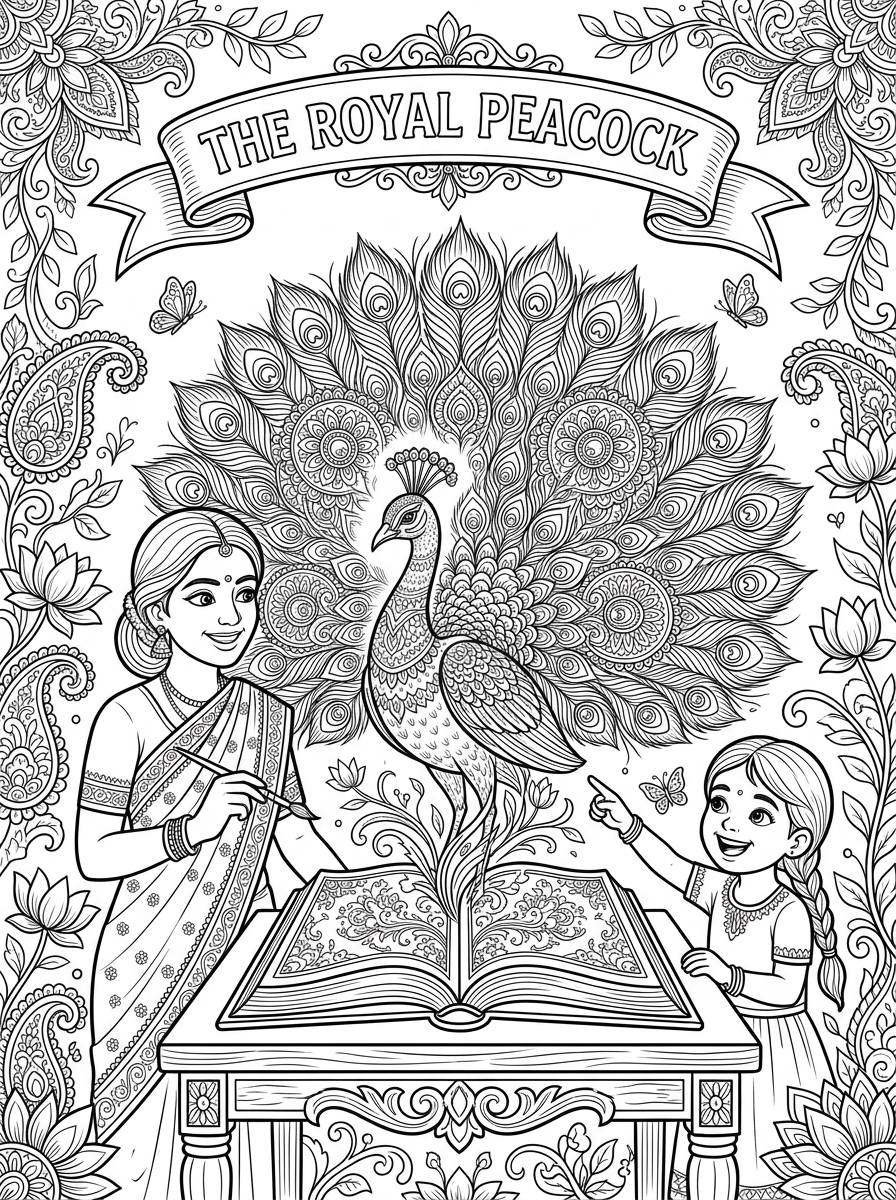
1. The Two Great Traditions: Srikalahasti vs. Machilipatnam
India’s Kalamkari heritage divides into two distinct geographical schools, each with its own artistic philosophy:
- Srikalahasti Style (Freehand Sacred Narrative): Centered around the holy temple town of Srikalahasti along the Swarnamukhi River. Here, artisans use no mechanical stamps or blocks whatsoever. Every single figure, scroll, and border is drawn entirely freehand using a sharpened bamboo reed pen. Srikalahasti Kalamkari specializes in large-scale temple tapestries depicting episodes from the Ramayana, Mahabharata, and Puranas.
- Machilipatnam Style (Carved Wood Block Printing): Rooted in the port town of Pedana near Machilipatnam. Influenced historically by Persian trade, this style employs hand-carved teakwood blocks to print repeating floral arabesques, delicate paisleys (boteh), and intricate mihrab arches onto fine muslin for royal garments and trade textiles.
2. Crafting the Bamboo Pen (The Kalam)
The traditional drawing instrument is an engineering marvel of organic simplicity. The artisan takes a mature bamboo or date-palm reed, whittles one end into a fine, sharp nib, and slits the tip to form a capillary fountain channel.
Directly above the nib, a thick ball of raw sheep's wool or absorbent cotton cord is tightly bound with hemp string. When dipped into fermented iron-vinegar mordant (Kasim), this wool reservoir holds several milliliters of liquid ink. The artist gently squeezes the wool with their thumb and fingers while guiding the tip across the cloth, maintaining an unbroken, razor-sharp black contour with remarkable fluid control.
3. The Organic Chemistry of Kasim and Chawal Khara
Kalamkari’s extraordinary archival longevity — surviving centuries without fading — is due to its chemical mordant bonding. The raw cotton is first bleached in cow dung, dried in direct sunlight, and treated in a bath of buffalo milk and powdered Myrobalan (Karakkaya fruit). The milk's natural fat prevents the liquid dyes from bleeding across the fabric fibers.
The black outline is drawn with Kasim, prepared by fermenting rusted scrap iron with sugarcane jaggery and palm wine in earthenware jars for 21 days. When this iron acetate solution touches the myrobalan-treated cotton, a chemical reaction produces an indelible, pitch-black iron tannate dye that permanently fuses into the cellulose fibers.
4. The Kalpavriksha (Tree of Life) as a Universal Motif
The signature masterpiece of Kalamkari illustration is the Kalpavriksha, or Tree of Life. Rooted deep in the underworld, its magnificent trunk rises into the earthly realm, while its spiraling branches expand into the cosmic heavens, bearing blossoms, fruits, and singing birds of paradise.
The Tree of Life provides an exceptional model for collaborative art: the sturdy trunk and primary branches establish a shared central structural spine, while the myriad sprawling leaves and birds allow two or more artists to populate the canopy with infinite personalized detail.
"Kalamkari teaches us that true art requires both the precision of the hand and the patience of the earth."