
In countless rural and semi-urban villages across India, an immense reservoir of artistic mastery remains invisible to the formal economy. For generations, women — mothers, grandmothers, and young daughters — have preserved sacred visual arts as part of daily domestic and community life. They paint protective threshold Kolams at dawn, weave vibrant handloom sarees, sculpt terracotta festival deities, and paint earthen walls with ancient folk motifs.
Yet historically, this staggering artistic genius was categorized merely as "unpaid domestic chores" or seasonal volunteer craft. Without direct market access, digital literacy, or commercial ownership, these women remained financially vulnerable, with many indigenous art forms facing extinction as younger generations sought urban wage labor. The Varnam Movement was established to change this paradigm permanently.
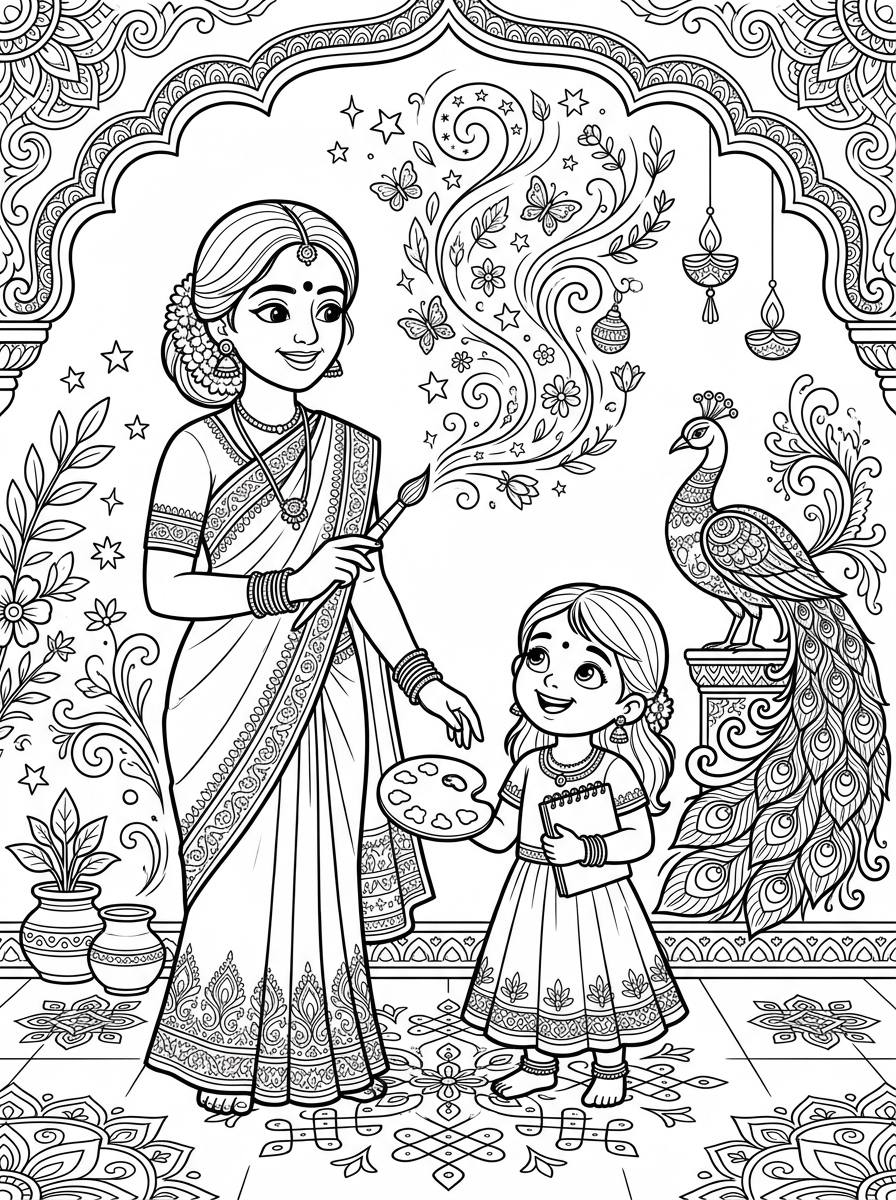
1. The Unmonetized Heritage of Domestic Folk Art
Consider the daily discipline of an Indian homemaker practicing Sikku Kolam or Rangoli. She produces an ephemeral, museum-quality masterwork on her doorstep every single morning using rice flour, only for it to be trodden underfoot by day's end. This reflects decades of disciplined training in geometry, spatial rhythm, and cultural symbolism.
When given access to modern graphic tablets and digital collaborative canvases, these artisans do not need to learn art from scratch — they already possess world-class spatial intuition. They simply need an intuitive bridge to translate their physical muscle memory into durable digital assets that command fair global value.
2. Bridging the Digital Divide with Pen Tablets and Workshops
Through community-funded studio workshops, Varnam equips rural women with pressure-sensitive digital drawing tablets and free training in digital vector illustration, collaborative canvas workflows, and publishing design:
- Intuitive Onboarding: By utilizing stylus interfaces that mimic traditional sticks and brushes, artisans become proficient in digital illustration in days rather than months.
- Preserving Ancestral Motifs: Artisans digitally archive vanishing regional folk motifs — from rare tribal Godna geometries to intricate Kalamkari botanical patterns — ensuring their preservation in high-resolution public repositories.
- Commercial Royalties & Fair Wages: Every commercial publication, children's coloring book, and collaborative merchandise design generated through the network provides direct, transparent stipends and royalties paid directly into the women's independent bank accounts.
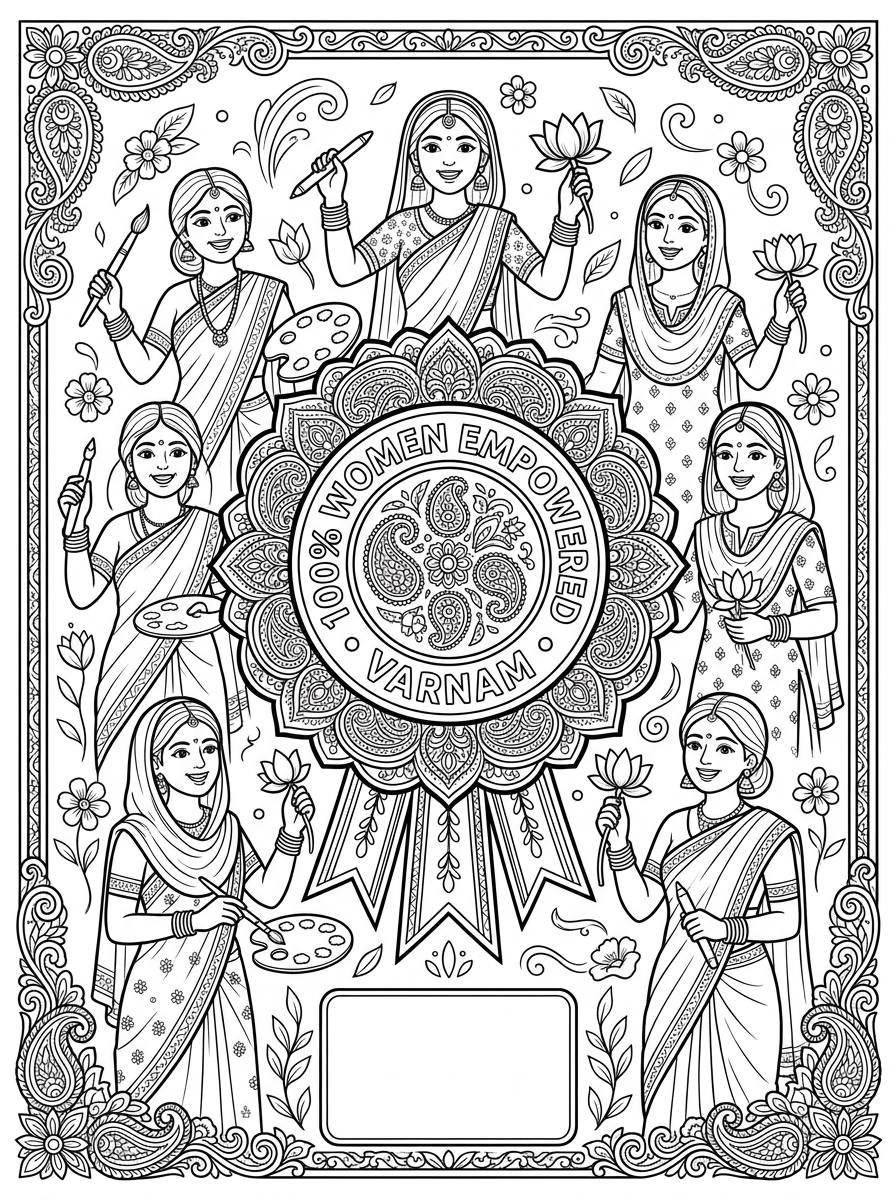
3. The Ripple Effect of Women’s Economic Independence
Empirical evidence across global development economics consistently demonstrates that when a woman earns independent income, she reinvests up to 90% of her earnings directly into her family's nutrition, healthcare, and children's education (compared to 30–40% for men).
In our partner artisan clusters, mothers earning fair wages through their artwork are sending their daughters to technical colleges, investing in family micro-enterprises, and transforming their standing in their village communities. A mother who was once viewed solely through the lens of domestic labor is now respected as a professional artist, educator, and household breadwinner.
4. How Every Stroke on Varnam Supports This Mission
When you draw, brainstorm, and collaborate on வர்ணம், you are supporting a broader vision of inclusive cultural technology. Proceeds from our commercial physical books and digital initiatives directly fund art supply stipends, digital tablets, and educational scholarships for rural women artisans.
We warmly invite educators, patrons, cultural institutions, and designers worldwide to join hands with us. If you have collaborative ideas or wish to support artisan clusters in your region, reach out directly to our team at exceptionz13@gmail.com.
"When you empower a woman with the tools of her own dignity, you do not just change her life — you elevate her family, her village, and the culture of her nation."